
Find Lee County Criminal History
Lee County criminal history records are managed by the Superior Court Clerk and the Sheriff's Office in Leesburg, which is the county seat in southwest Georgia. The county falls under the Southwestern Judicial Circuit, which also covers Sumter, Macon, Schley, Stewart, and Webster counties. If you need to look up a criminal record in Lee County, you can go through local offices or use state search tools. The clerk on Leslie Highway holds court case files. The sheriff on Pinewood Road keeps arrest and booking data. State tools from the GBI can pull up felony records linked to Lee County. This page breaks down how the system works and where to start.
Lee County Criminal History Quick Facts
Lee County Sheriff and Criminal Records
The Lee County Sheriff's Office is at 119 Pinewood Road, Leesburg, GA 31763. You can call (229) 759-6040 to reach them. The sheriff runs the county jail and handles all bookings for people arrested in Lee County. When someone gets booked, the jail logs the name, date of arrest, charges, bond amount, and release status. This booking data is one half of the criminal history picture for the county. The court records held by the clerk make up the other half.
Every arrest in Lee County gets reported to the Georgia Crime Information Center. Under O.C.G.A. Section 35-3-34, all law enforcement agencies in the state must send arrest data to the GCIC. That means when someone gets booked into the Lee County Jail, the record flows into the statewide database. Fingerprints taken at booking tie the record to a specific person rather than just a name match. This is what makes the state system more reliable than a simple name search.
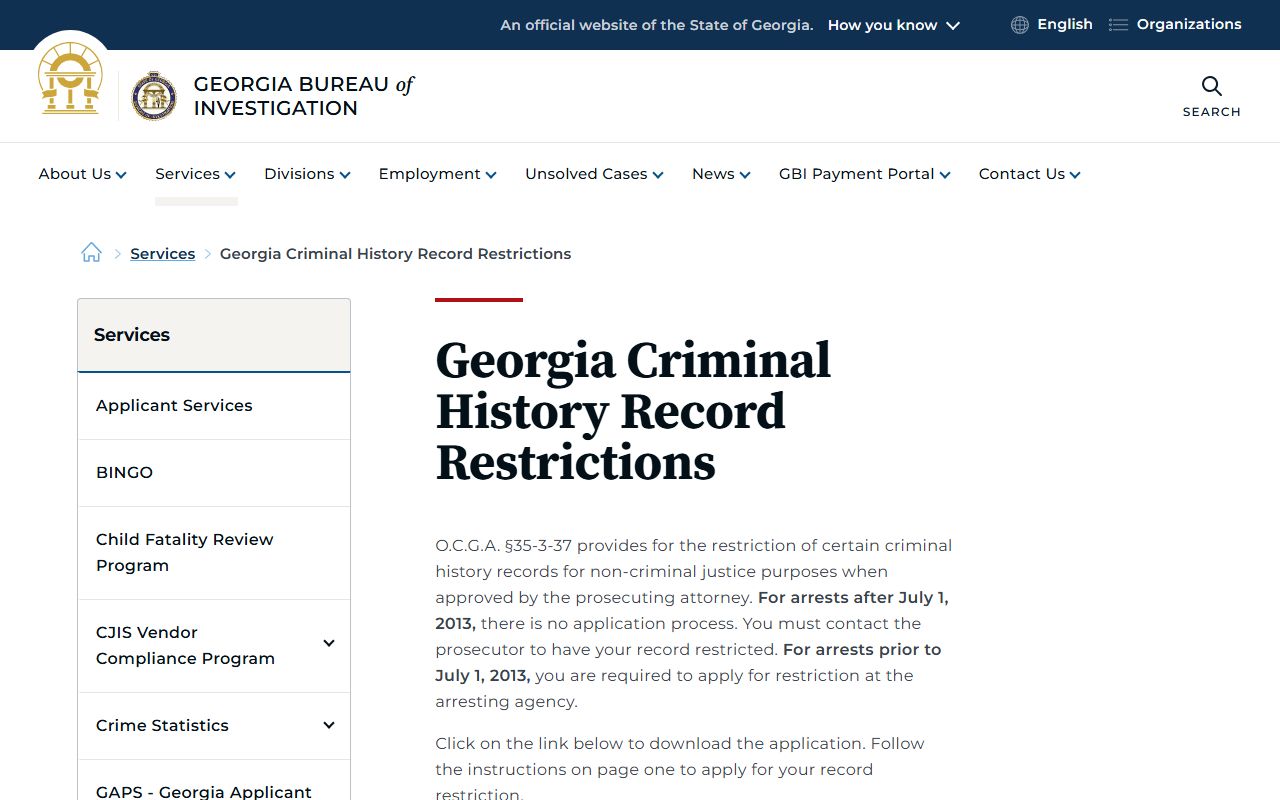
The Georgia GBI services page provides details on statewide criminal history tools that include Lee County records.
Call the sheriff's office if you need to check on someone in the Lee County Jail. They can tell you if a person is being held, what the charges look like, and what the bond is set at. Walk-in requests at 119 Pinewood Road are taken during normal hours. The staff can pull up booking records while you wait. For a recent arrest in Lee County, the sheriff's office is the fastest local source.
Criminal Records at Lee County Clerk
The Lee County Superior Court Clerk is at 100 Leslie Highway, Leesburg, GA 31763. The phone number is (229) 759-6018. This office holds all criminal case files that pass through the Lee County Superior Court. Felony charges, some misdemeanor cases that get bound over, and appeals from lower courts all get stored here. Each file tracks the charges, court dates, plea details, motions, and the final disposition. If you want to know how a criminal case ended in Lee County, the clerk is where that information lives.
You can visit the clerk's office on Leslie Highway to search the case index in person. There is a per-page fee for copies. Certified copies cost more but they carry the official court seal. You need certified copies for most legal proceedings. The Lee County clerk works with the Georgia Superior Court Clerks' Cooperative Authority. That organization runs a statewide database of court filings, and some Lee County cases appear in it. The cooperative pulls data from local clerks across Georgia and puts it in one system.
The clerk can look up a case by name or by case number. If you have the case number, the search goes faster. Note that Lee County has a Magistrate Court that handles certain lower-level criminal matters on its own. If the Superior Court clerk does not have the file you need, the Magistrate Court in Leesburg may have it. The Southwestern Judicial Circuit District Attorney handles prosecution for criminal cases in Lee County, so their office is another place to ask about case status.
Lee County Criminal Record Restriction
Georgia calls the process record restriction. It is different from expungement. When a record gets restricted in Lee County, it is sealed from public searches. The record still exists. Law enforcement can access it. The public cannot.
A Lee County criminal record can be restricted in several ways. Charges that were never referred to a prosecutor qualify after a waiting period. For misdemeanors, the wait is two years from the date of arrest. Most felonies need four years. Serious violent felonies require seven years to pass. If charges were dismissed or you were found not guilty at trial, the path to restriction is shorter. The Southwestern Judicial Circuit prosecutor has ten days to object after an acquittal in Lee County. If there is no objection, the record gets sealed.
The First Offender Act also plays a role. Found at O.C.G.A. Section 42-8-60, this law lets a judge in Lee County sentence a first-time offender without entering a formal conviction. The person serves their sentence. If they complete the terms, the court enters a discharge and the record gets restricted from public criminal history searches. People who should have been sentenced under the First Offender Act at the time but were not may be able to petition the Lee County court to apply it after the fact. That retroactive option requires going back to the original judge.
For arrests on or after July 1, 2013, you start the restriction process by going to the Southwestern Judicial Circuit DA. Older arrests require contact with the arresting agency first. The GBI restrictions page explains the full process and who qualifies under current law.
State Tools for Lee County Criminal History
State-run search tools cover all 159 counties in Georgia. Lee County is included. The Georgia Felon Search costs $15 per search and checks the GCIC database for felony convictions statewide. You need a first name, last name, date of birth, and sex to run a search. Results come back right away. The $15 fee applies whether or not a record is found. Only felony convictions show up. Misdemeanors, pending charges, and restricted records will not appear in the results.
The Georgia Department of Corrections offender search is free to use. It shows people who are currently serving time in a state prison. Someone convicted in Lee County and sent to a GDC facility would appear here. People in the Lee County Jail or those who already finished their sentence will not show up. It is a narrow tool but it works well if the person went to state prison.
Under O.C.G.A. Section 35-3-37, any person in Georgia can request their own criminal history record. You get fingerprinted at a law enforcement agency, pay the fee, and the GBI sends back a report from the GCIC database. The Lee County Sheriff's Office can handle the fingerprinting step. The GBI FAQ page explains the process in detail and answers common questions about fees and wait times.
How to Search Lee County Criminal History
There are several paths to get criminal history records in Lee County. The best approach depends on what type of record you need and where it came from.
- Call the Lee County Sheriff at (229) 759-6040 for jail bookings and arrest data
- Visit the Superior Court Clerk at 100 Leslie Highway for case files and certified copies
- Use the Georgia Felon Search for statewide felony conviction records
- Search the GDC offender database for people in state prison
- File an open records request with the sheriff for specific arrest reports
Each source covers a different part of the criminal history system. Court records from the clerk show charges and outcomes. The sheriff tracks bookings and bond status. State tools add felony conviction data and corrections info. You may need to check more than one to build a full view of criminal history in Lee County. The clerk's office is the most complete source for court case results. The sheriff is best for arrest and jail records. Between the two local offices and the state databases, you can put together a solid picture of what is on file for Lee County.
Nearby Counties With Criminal Records
Lee County sits in southwest Georgia just north of Albany. Criminal cases near the county border can sometimes fall under a different jurisdiction. If you cannot find a record in the Lee County system, try checking one of these nearby counties.
Dougherty County is to the south and is home to Albany, the largest city in this part of the state. Terrell County borders Lee to the west. Sumter County is to the northwest and shares the Southwestern Judicial Circuit with Lee County. Crisp County sits to the northeast, while Worth County borders Lee to the east. Each has its own court clerk, sheriff, and criminal record system. All of them report arrest data to the statewide GCIC database.